
Occupational Therapy
Occupational Therapy
Occupational therapy at Kids Connect supports motor skills, sensory processing, self-care routines, and the ability to function independently at home, school, and in the community.
1. Sensory Processing
Occupational therapy helps autistic kids manage how they experience and respond to sensory input. This is often called Sensory Integration Therapy.
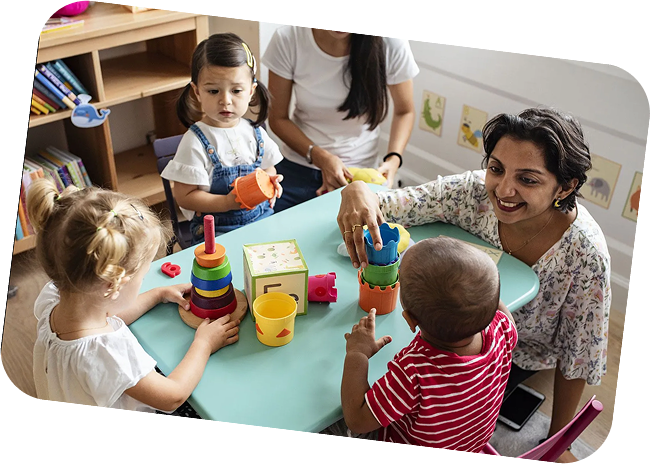
Regulating sensory input
Helps kids who are hypersensitive (easily overwhelmed) or hyposensitive (under-responsive) to things like noise, touch, or movement.
Creating a “sensory diet”
A personalized plan of activities (e.g., swinging, jumping, deep pressure) that provides the right kind of stimulation throughout the day.
Improving tolerance
Gradual exposure to things like clothing textures, messy
play, or loud environments to help reduce distress.
Helping with focus
Addressing sensory needs can increase attention in class or during tasks.
Reducing meltdowns or shutdowns
Managing sensory overload can help prevent emotional outbursts or withdrawal.
2. Fine Motor Skills
Fine motor development is essential for independence in school, self-care, and play.
Handwriting
OT helps with grip, pressure, letter formation, and endurance for writing tasks.
Using tools
Support for scissors, utensils, toothbrushes, and more.
Hand strength and dexterity
Activities like squeezing, pinching, or threading beads improve control.
Bilateral coordination
Teaching kids to use both hands together (e.g., holding paper while writing, cutting with scissors).
Improving precision
Targeting small hand movements for tasks like zipping, snapping, or assembling puzzles.
3. Emotional Regulation and Coping
OT helps children understand and manage their emotions and reactions in different environments.
Identifying emotions
Teaching kids how to recognize feelings in themselves and others.
Self-regulation techniques
Strategies like deep breathing, squeezing stress balls, or using calming visuals.
Routine-based coping skills
Building emotional regulation into daily activities (e.g., transitions, bedtime).
Understanding triggers
Helping kids and caregivers recognize what causes distress and how to prevent it.
Promoting flexible thinking
Guiding kids to handle unexpected changes without becoming overwhelmed.
4. Play and Social Skills
Play is how kids learn. OT uses structured and unstructured play to build social confidence and connection.
Learning turn-taking and sharing
Foundational for cooperative play and school participation.
Understanding nonverbal cues
Teaching eye contact, facial expressions, and body language.
Following play routines
Practicing structured games with rules, which helps with classroom behavior and peer interaction.
Imaginative and pretend play
Developing creativity and understanding others’ perspectives.
Building confidence
Encouraging positive social interactions to reduce anxiety and isolation.